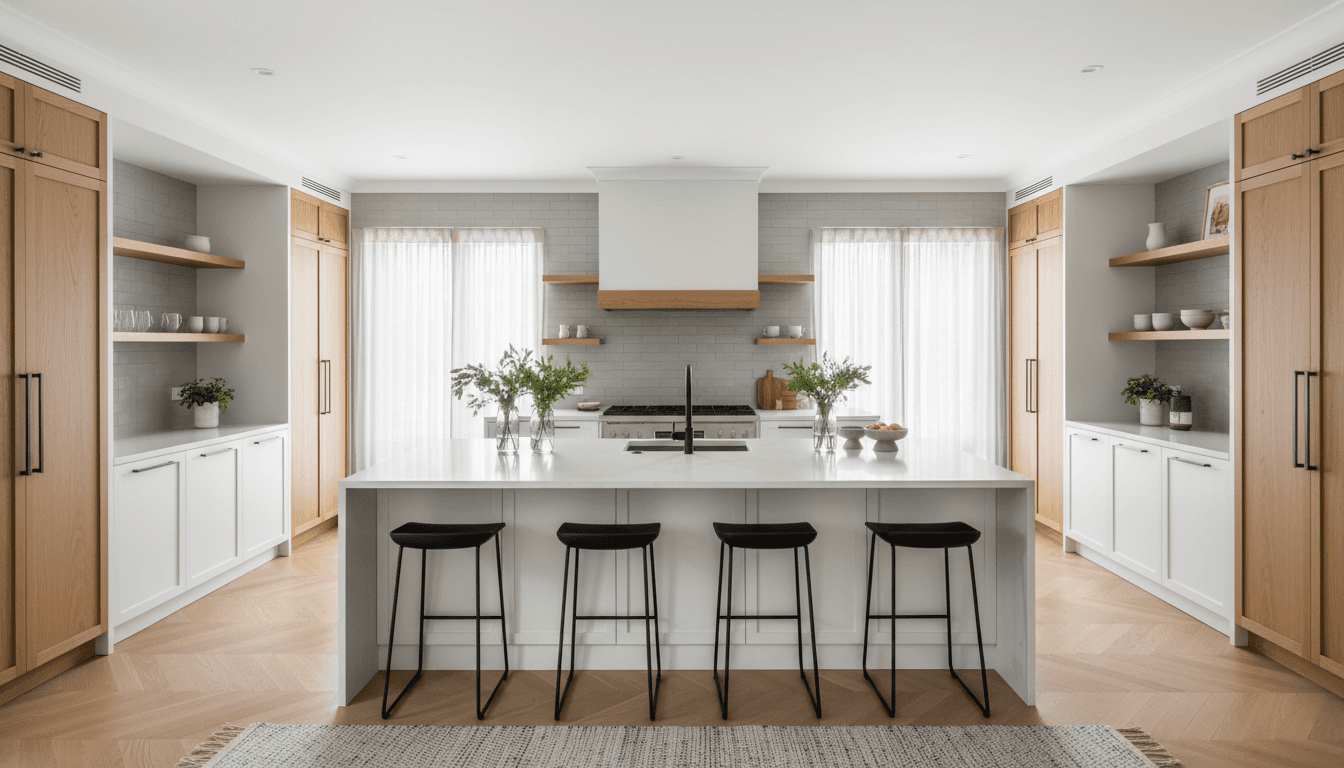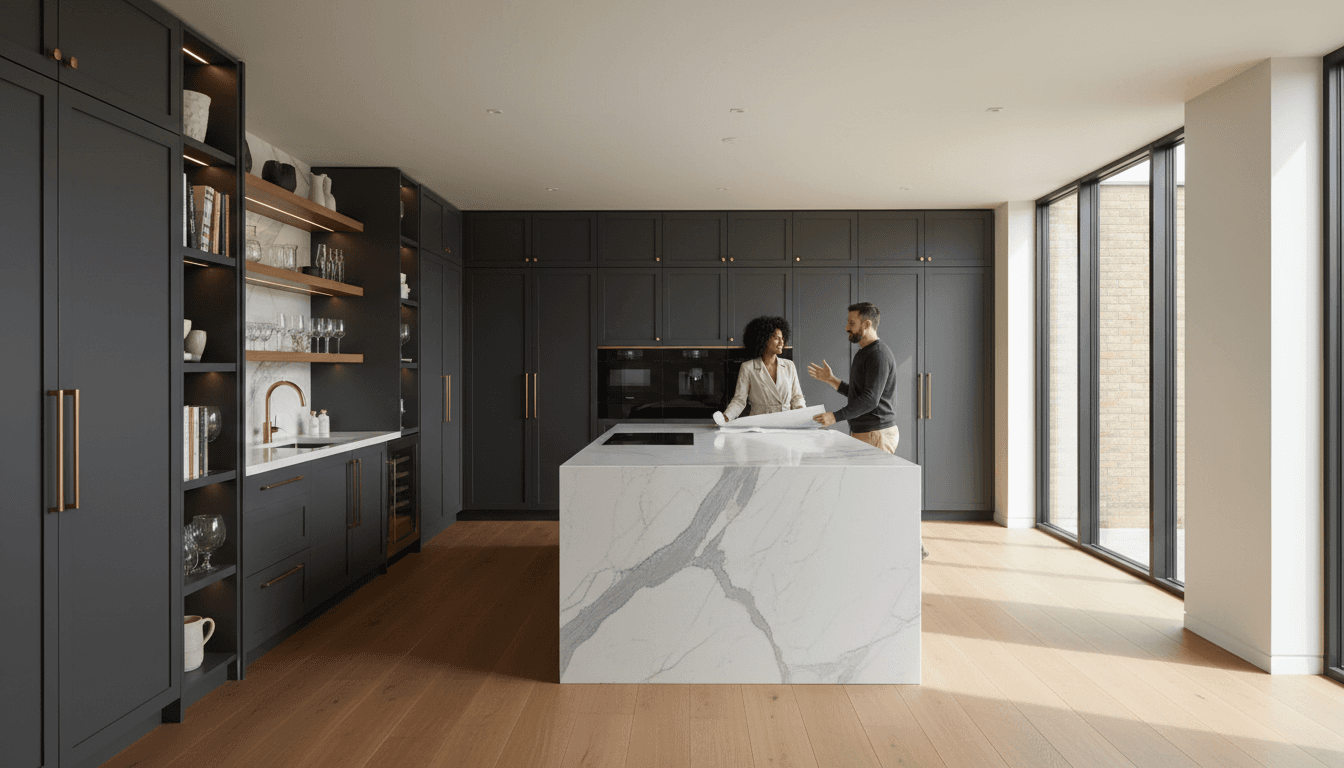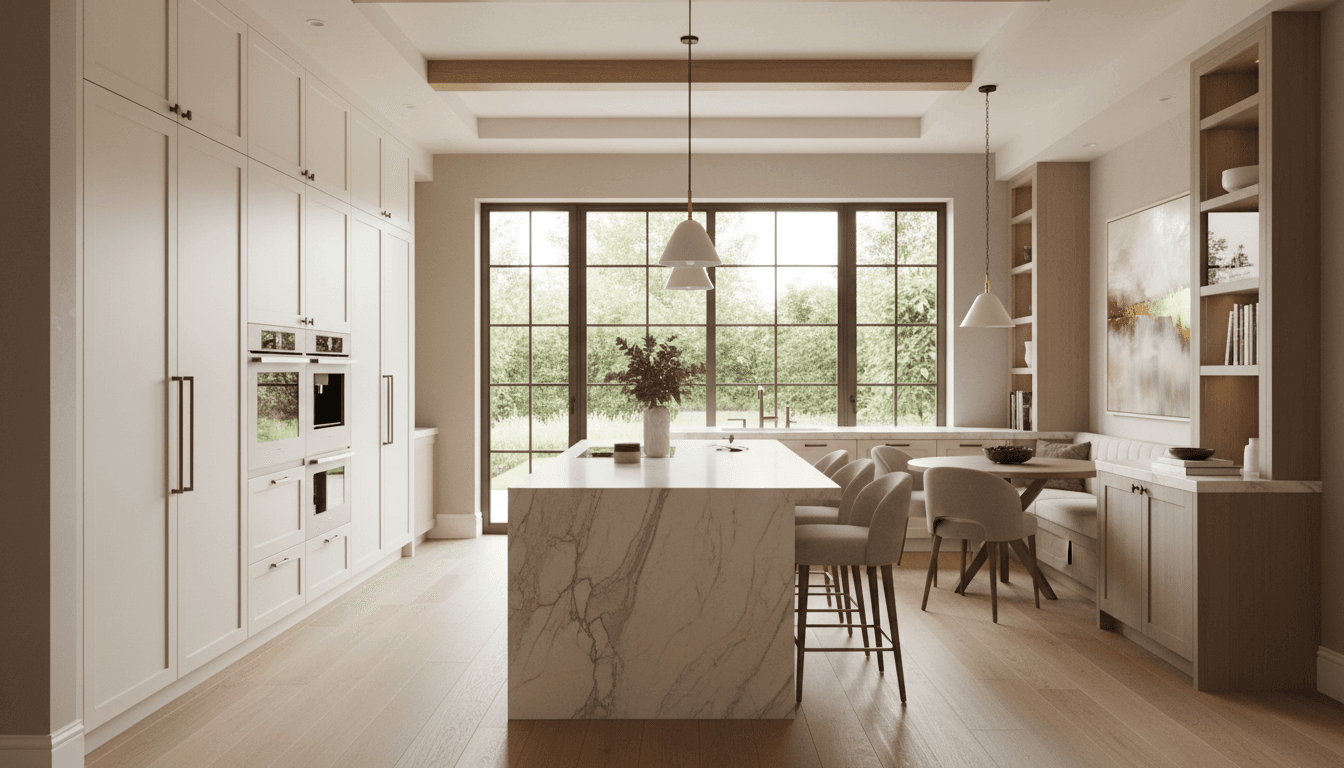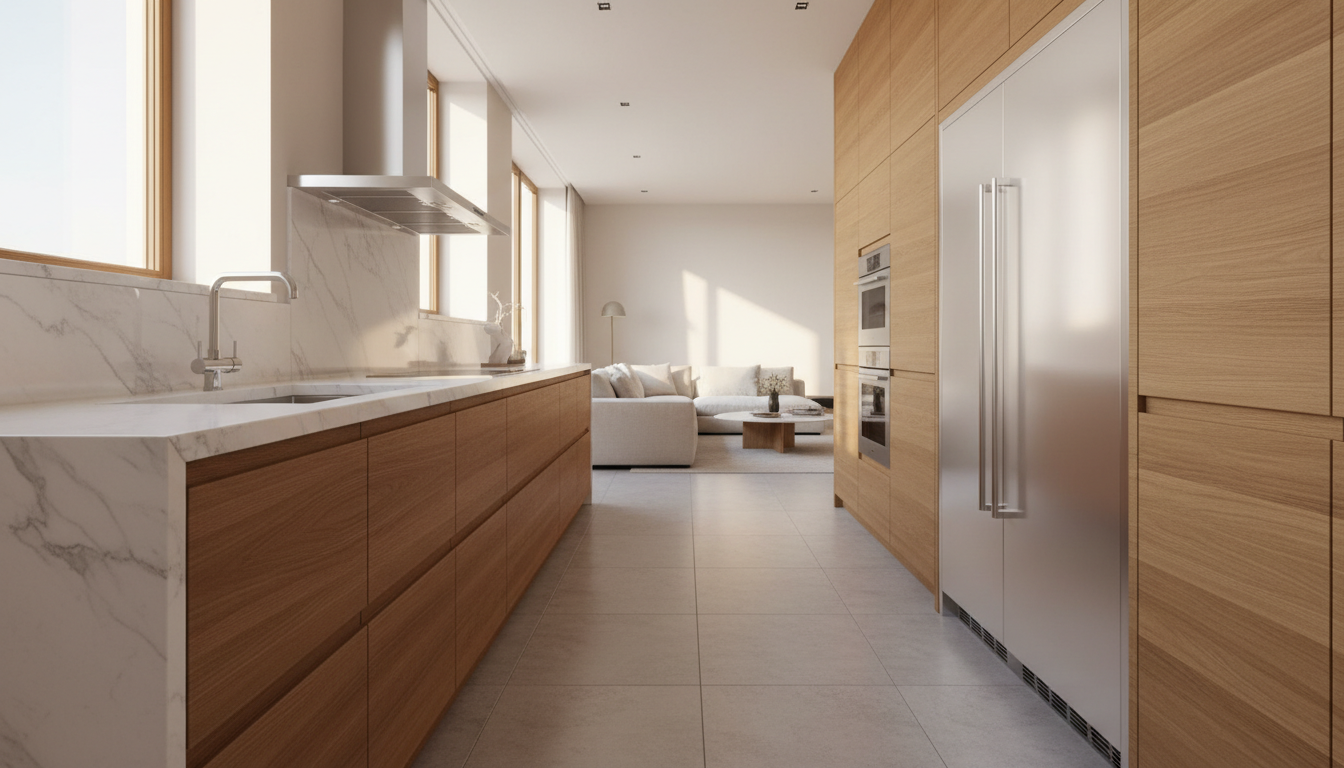
Hickory, hard maple, and white oak are the best wood for kitchen cabinets because of their exceptional durability and resistance to scratches or dents. These hardwoods provide the necessary strength for heavy daily use, while options like cherry and walnut offer a balance of longevity and premium aesthetics for long lasting cabinetry.
Selecting the right material for your kitchen cabinets often feels like a balancing act between aesthetic appeal and long term structural integrity. In the demanding climate of Utah, where humidity levels fluctuate and the air is notoriously dry, a beautiful wood choice can quickly become a costly mistake if it lacks the necessary stability. At Keith Cabinet, we believe your cabinetry should be a legacy piece, not a temporary fixture. This guide explores the engineering behind wood selection, from the specific species that resist warping to the critical differences between solid wood and high grade plywood boxes. You will learn how to identify the most durable materials for your specific finish goals, ensuring your investment remains as functional and refined as the day it was installed.
Understanding Durability, Why Wood Species Matters
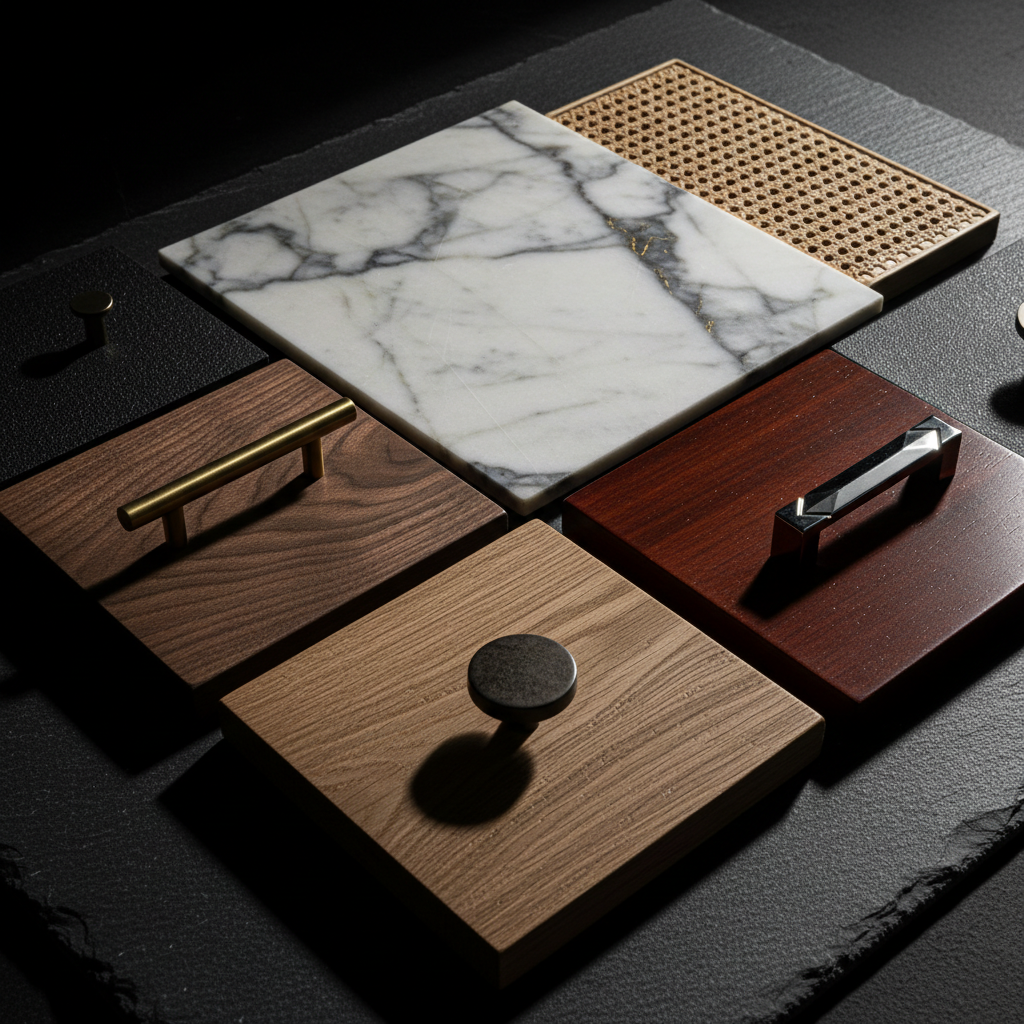
Selecting the best wood for kitchen cabinets starts with understanding how different species handle the daily impact of a busy household. In Carbon County, where kitchens often serve as the central hub for active families and heavy cooking, durability is not just a preference; it is a necessity. The primary metric used to measure this is the Janka Hardness Scale. This test determines the resistance of a wood sample to denting and wear by measuring the pounds of force required to embed a small steel ball halfway into the wood. The higher the number, the better the wood resists impact.
Wood Species | Janka Hardness Rating (lbf) | Grain Characteristics |
|---|---|---|
Hickory | 1,820 | Distinct, rustic, and varied |
Hard Maple | 1,450 | Fine, uniform, and smooth |
White Oak | 1,360 | Prominent, linear, and textured |
Hickory sits at the top of the list for sheer impact resistance. It is exceptionally dense, making it the most difficult to dent when a heavy pot or a child's toy hits the cabinet face. However, for homeowners pursuing a sleek or modern aesthetic, Hard Maple is often the preferred choice. While slightly less hard than Hickory, it remains incredibly robust and offers a much smoother grain that lacks the heavy texture of Oak or the rustic color variations of Hickory. White Oak remains a timeless standard, balancing impressive structural strength with a grain pattern that handles moisture and wear with ease. Choosing a dense hardwood through professional custom cabinet design and fabrication provides the essential first line of defense against the physical demands of a high traffic kitchen.
The Most Durable Wood Species for Your Kitchen
Choosing the best wood for kitchen cabinets involves weighing the physical properties of the lumber against the desired aesthetic. Each species brings a unique set of characteristics to the shop floor, affecting everything from how the doors hang to how the finish ages over time.
Hickory is the premier choice for homeowners prioritizing maximum durability. It is the densest commercial hardwood available, characterized by a wild, contrasting grain that ranges from light blonde to dark roasts. Because of its extreme density, Hickory is the most resistant to impact, though its busy patterns are best suited for rustic or traditional styles. It can be challenging to stain uniformly due to its varying density, so it is often finished with a clear coat to showcase its natural character.
Hard Maple offers a more versatile alternative for those who want strength without the aggressive grain of Hickory. It features a closed, fine grain that creates a smooth, consistent surface. Maple is remarkably strong and heavy, making it an excellent candidate for high use areas. While it takes paint exceptionally well, staining Maple requires expertise to prevent blotching, as the tight grain does not always absorb pigment evenly. Seeing these species in a finished kitchen, such as those in our portfolio of local projects, can help you visualize how the grain interacts with different layouts.
Red and White Oak remain the industry standards for longevity and classic appeal. Red Oak has a prominent, open grain that feels textured to the touch and absorbs stains deeply and evenly. White Oak is slightly harder and possesses a tighter grain structure that makes it naturally more moisture-resistant. This makes White Oak a superior choice for areas near sinks or dishwashers where steam and occasional splashes occur.
When homeowners ask what wood is hardest to break, they are typically distinguishing between surface hardness and structural integrity. Surface hardness, measured by the Janka scale, tells you how well a drawer front will resist a dent from a falling pan. Structural integrity refers to the wood's ability to hold a fastener and resist snapping under a load. Hickory and White Oak excel in both categories, providing a cabinet that is not only difficult to mar but also stays square and sturdy for decades.
Plywood vs Solid Wood Cabinet Boxes: The Climate Factor
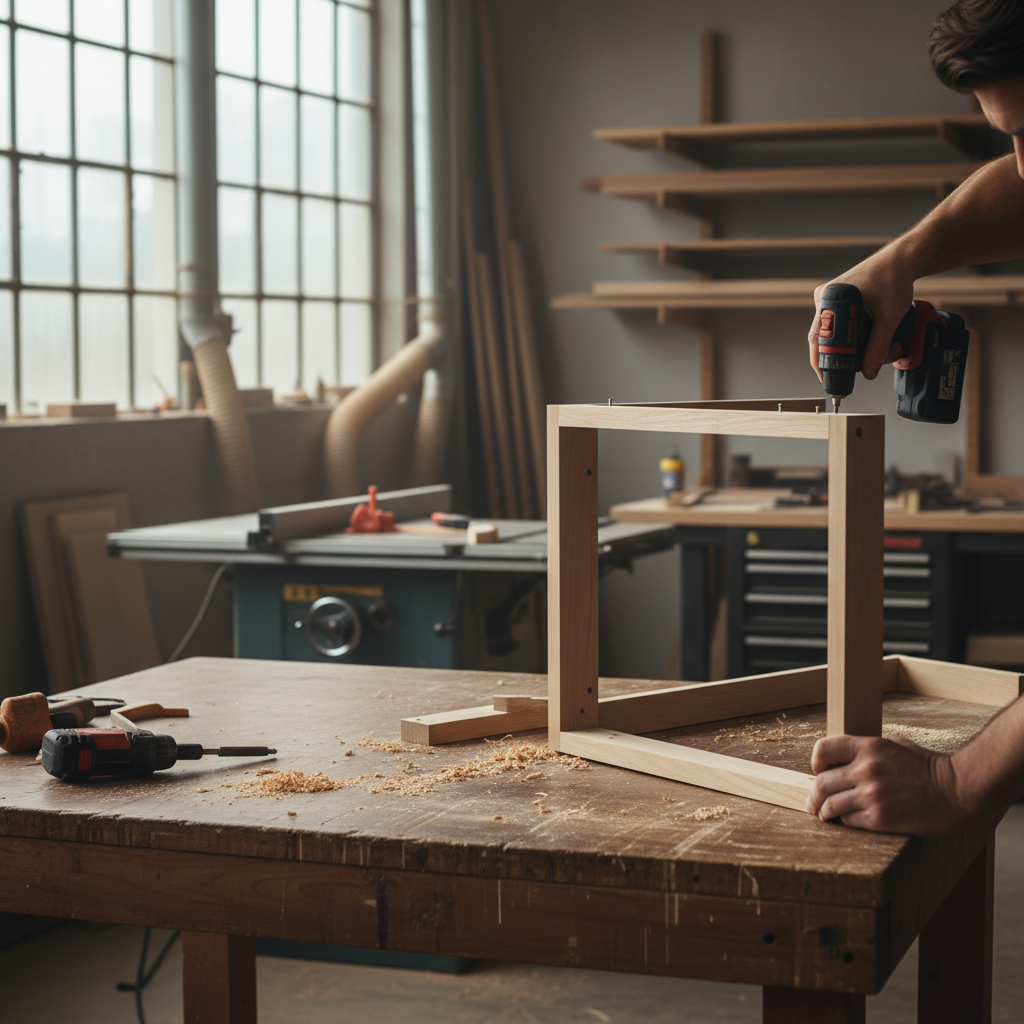
While selecting the best wood for kitchen cabinets often focuses on the visible door fronts, the material used for the cabinet box dictates the structural lifespan of the kitchen. In the high desert climate of Carbon County, where humidity levels swing drastically between frigid winters and arid summers, material stability is the primary concern. Many homeowners assume that a box made of 100% solid wood is the superior choice, but for the structural carcass of a cabinet, high quality plywood is almost always the more practical engineering solution.
Solid wood naturally expands and contracts across its grain as it absorbs or releases moisture. In Utah's dry environment, a solid wood box is prone to shrinking, which can lead to cracked joints or doors that no longer sit flush. Plywood solves this through its cross grain construction. By gluing thin layers of wood in alternating directions, the material neutralizes the natural movement of the wood fibers. This results in a dimensionally stable box that remains square and rigid regardless of seasonal shifts.
Material Type | Structural Benefit | Best Use Case |
|---|---|---|
Furniture-Grade Plywood | Exceptional screw holding and warp resistance | Cabinet sides, bottoms, and structural shelving |
Solid Hardwood | High impact resistance and beauty | Face frames, doors, and drawer fronts |
Particleboard/MDF | Low cost, smooth surface | Economy projects; avoid for heavy load bearing |
It is important to differentiate high grade plywood from cheaper alternatives like particleboard or medium density fiberboard (MDF). While these engineered materials are common in mass produced cabinetry, they lack the tensile strength required for long term durability. Particleboard is particularly susceptible to sagging under the weight of heavy stacks of plates or small appliances. For homeowners concerned with longevity, furniture grade plywood offers the best balance of strength and climate resilience. Unlike MDF, plywood retains its shape when loaded with heavy cast iron cookware or sets of stoneware. The internal layers of real wood veneers provide superior screw holding power, ensuring that hinges and drawer slides stay securely fastened over years of daily use. To discuss which materials are right for your specific layout, you can contact Keith Cabinet for a detailed consultation.
Choosing the Best Wood for Painted Cabinets
Beyond structural stability, the choice of species significantly impacts the final aesthetic when opting for a painted look. A common inquiry during the design process involves the best wood for painted cabinets. Homeowners often assume Oak is a prime candidate due to its durability, but its prominent, open grain presents a challenge. Paint settles into the deep pores of Oak, leaving a heavy texture that is difficult to hide. Unless a rustic, grain-through look is desired, Oak is typically bypassed for painted applications.
For a smooth, glass like finish, Hard Maple is the superior choice. Its tight, closed grain provides a flat surface that allows paint to lay evenly without soaking into deep crevices. Poplar is a frequent alternative because it lacks distinct grain patterns and is cost effective, though it is notably softer than Maple and more prone to minor dings. When selecting the best wood for kitchen cabinets that will receive a paint color, density and grain structure are the two most important factors.
A professional finish also accounts for natural wood movement. Even with high quality species, wood expands and contracts at the joints. In our shop, we focus on precision custom cabinet design and fabrication to ensure that doors and face frames are built to handle these shifts. Using stable hardwoods like Maple prevents the paint film from bridging and eventually cracking or chipping at the seams where the stiles and rails meet.
Finishes That Actually Last, Stains vs Paints
The choice between stain and paint dictates how gracefully a kitchen ages under the pressure of daily use. Stained finishes are fundamentally different from paints because the pigment soaks directly into the wood grain. This penetration makes stain highly resilient to the minor abrasions common in a busy kitchen. If a stained Hickory or Oak door suffers a small scratch, the damage is often disguised by the natural variations and depth of the wood itself. Conversely, paint acts as a topical film that sits on the surface. While modern coatings are incredibly resilient, paint can eventually show wear on high-touch points like the edges of a trash pull-out or the area around a cabinet handle where oils from skin are most frequent.
Finish Type | Application Style | Maintenance Advantage |
|---|---|---|
Stained Wood | Penetrating | Hides scratches; highlights natural grain |
Painted Wood | Film-forming | Provides a smooth, uniform color; easy to wipe clean |
Conversion Varnish | Top-coat sealer | Superior chemical, moisture, and grease resistance |
For homeowners seeking the most durable results, the application of a conversion varnish is the professional standard. Unlike basic retail polyurethanes, a post-catalyzed conversion varnish creates a chemical bond that is nearly impervious to water, cooking oils, and common household cleaners. This level of protection is essential regardless of which species you identify as the best wood for kitchen cabinets. A high-quality finish prevents the Utah climate from drawing moisture out of the wood while providing a hard, clear barrier that resists yellowing and mechanical wear. To see these finishes in person, you can view our portfolio of local projects or contact Keith Cabinet to discuss the specific durability needs of your home.
Beyond the Surface: Hardware and Drawer Box Construction
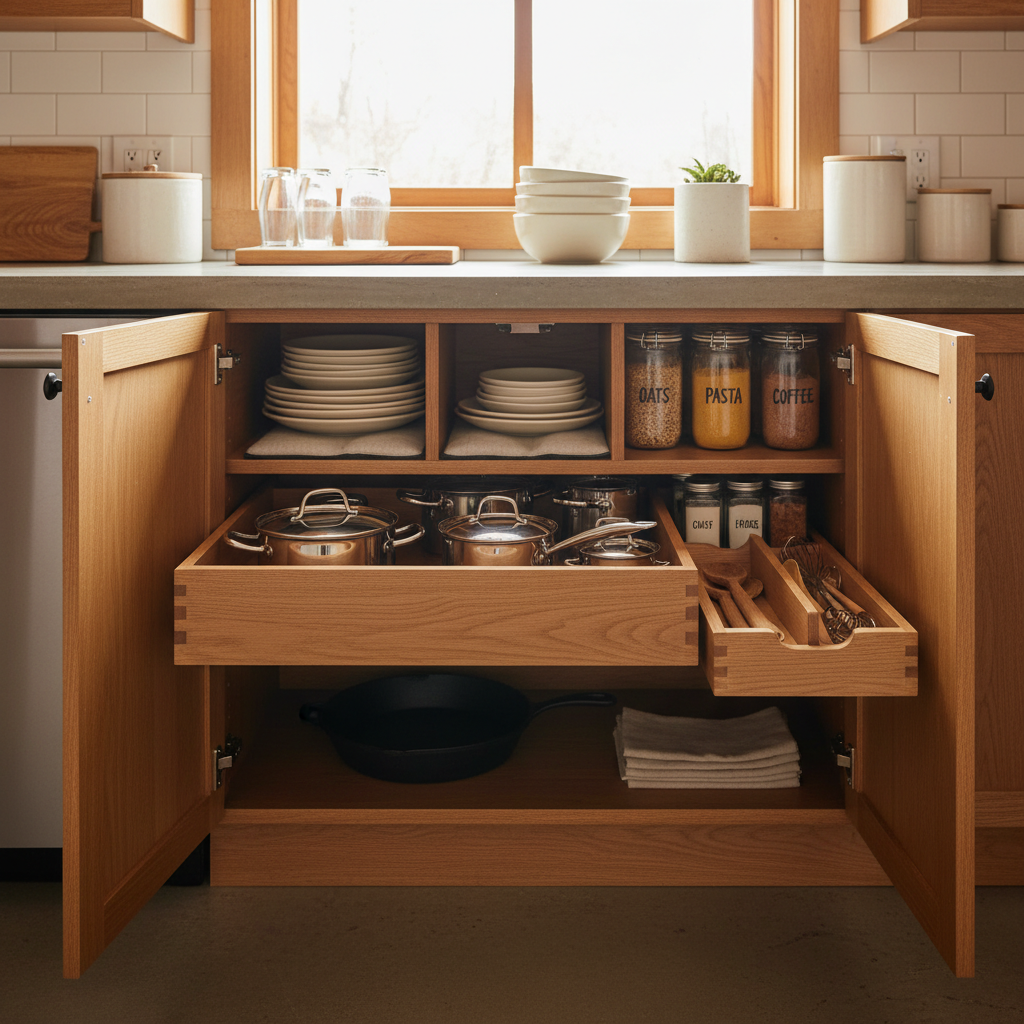
A cabinet is only as durable as its moving parts. While the face frame and doors represent the aesthetic, the drawer boxes and hardware handle the physical stress of daily operation. When homeowners ask if plywood or solid wood is better for building drawer boxes, the answer usually favors solid hardwood for its superior performance in joinery. Solid wood sides, often 5/8 inch thick, provide the necessary density for traditional dovetail joints. These interlocking tails and pins create a mechanical bond that resists being pulled apart, unlike stapled or nailed joints that eventually fail under the weight of heavy cutlery or cast iron cookware.
Selecting the best wood for kitchen cabinets is a critical step, but it must be paired with robust internal construction to be truly effective. Precision in custom cabinet design and fabrication is what separates a long lasting drawer from one that binds or sags. We emphasize the use of soft close undermount slides for all high traffic areas. These slides support the weight from beneath rather than the sides, which increases load capacity and offers a cleaner appearance. The soft close mechanism does more than just prevent noise; it protects the cabinet structure by eliminating the jarring impact of slamming, which can loosen fasteners and hinges over time.
Durability also relies on perfect alignment. If a drawer box is even slightly out of square, the hardware will experience uneven friction, leading to premature bearing failure and metal fatigue. Our fabrication process ensures that every box is perfectly square and every slide is leveled with precision. This attention to detail ensures that the materials work in harmony, preventing unnecessary wear and keeping the kitchen functional for decades. If you are ready to upgrade your storage with professional grade construction, you can contact Keith Cabinet to start your project.
Selecting the ideal wood for your Utah kitchen involves balancing aesthetic preferences with the practical demands of our unique climate. While durability is essential for lasting cabinets, the right choice ensures your home remains beautiful for years to come. If you feel uncertain about which materials best suit your specific needs, reaching out for professional guidance is a simple next step. You can read more about my background and dedication to quality craftsmanship to see how we can work together.