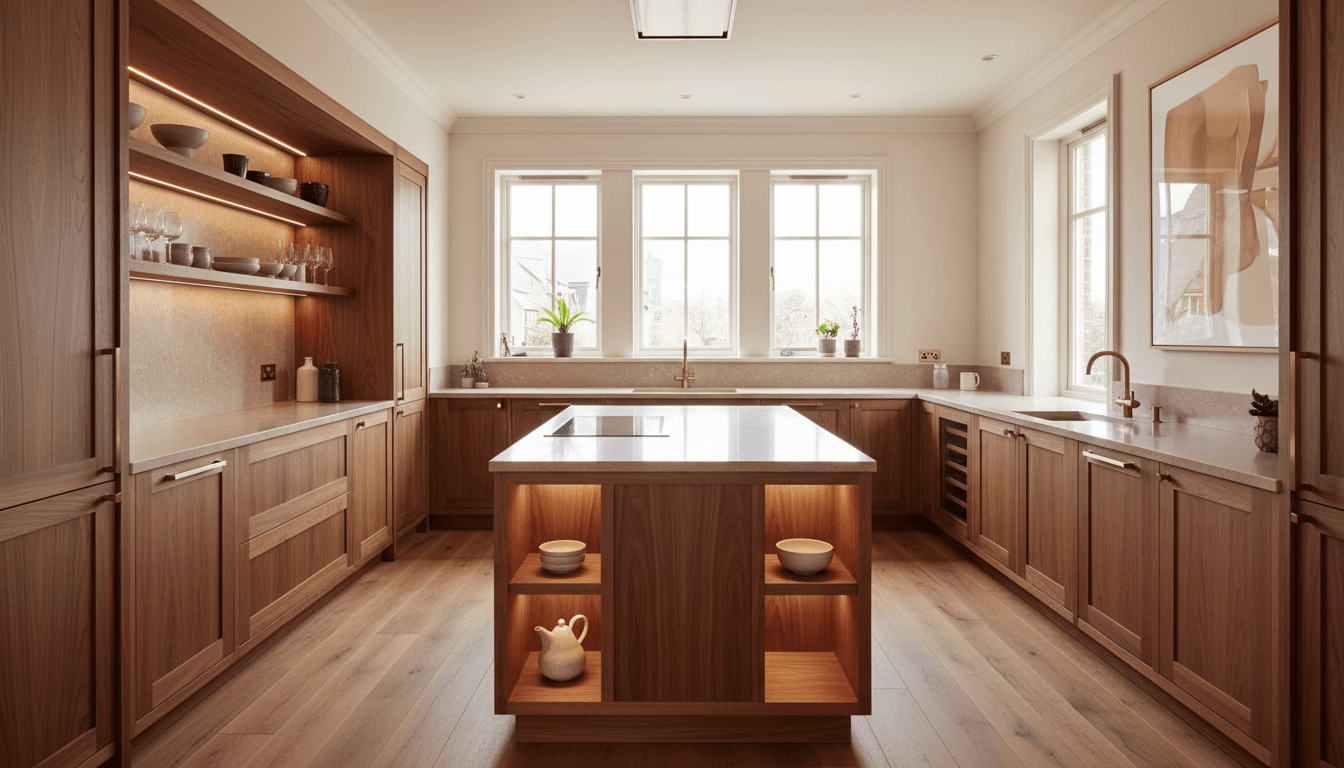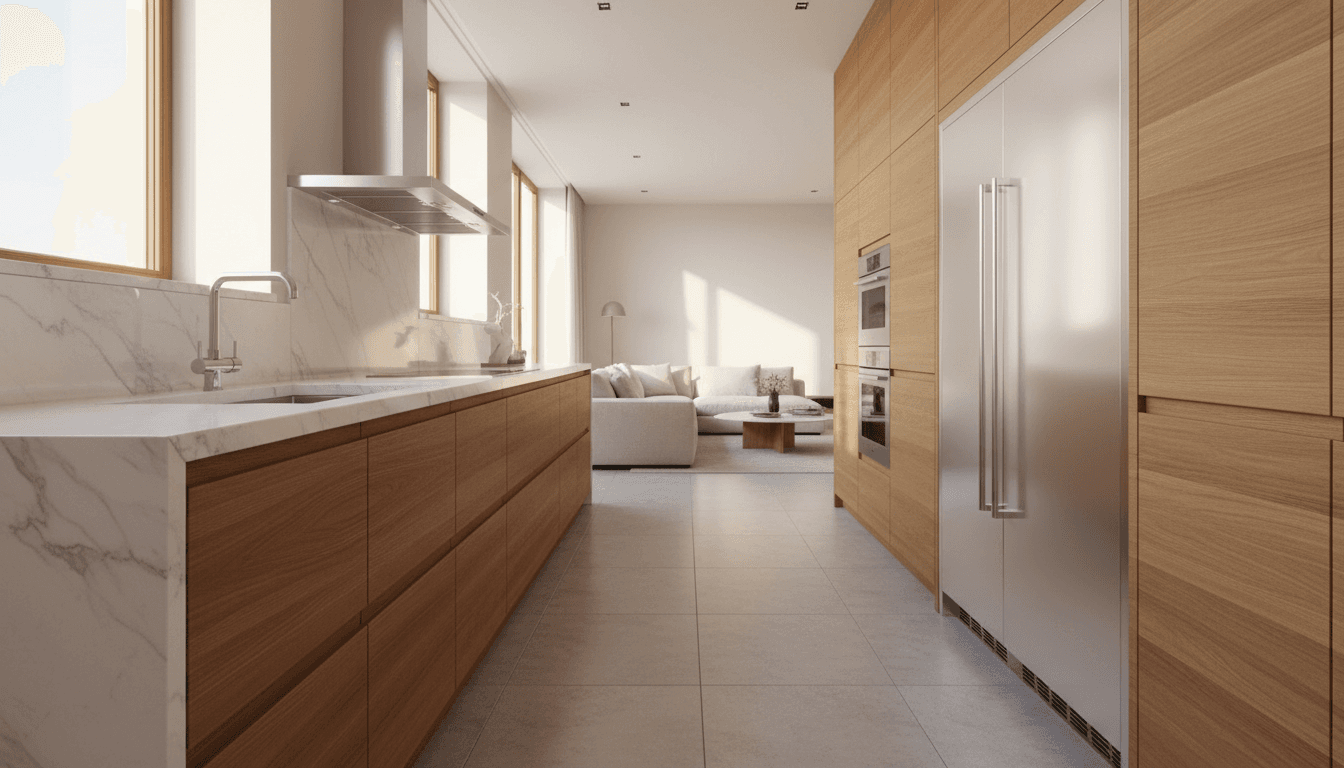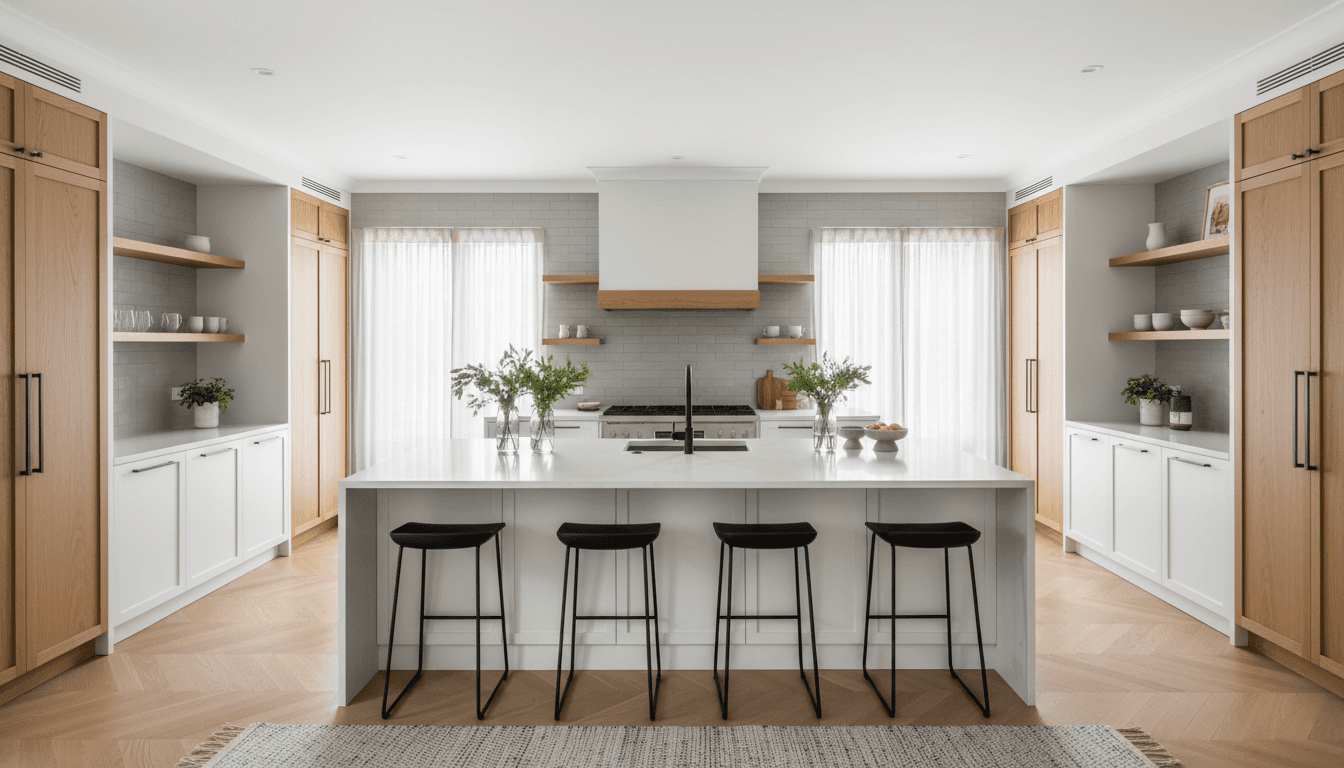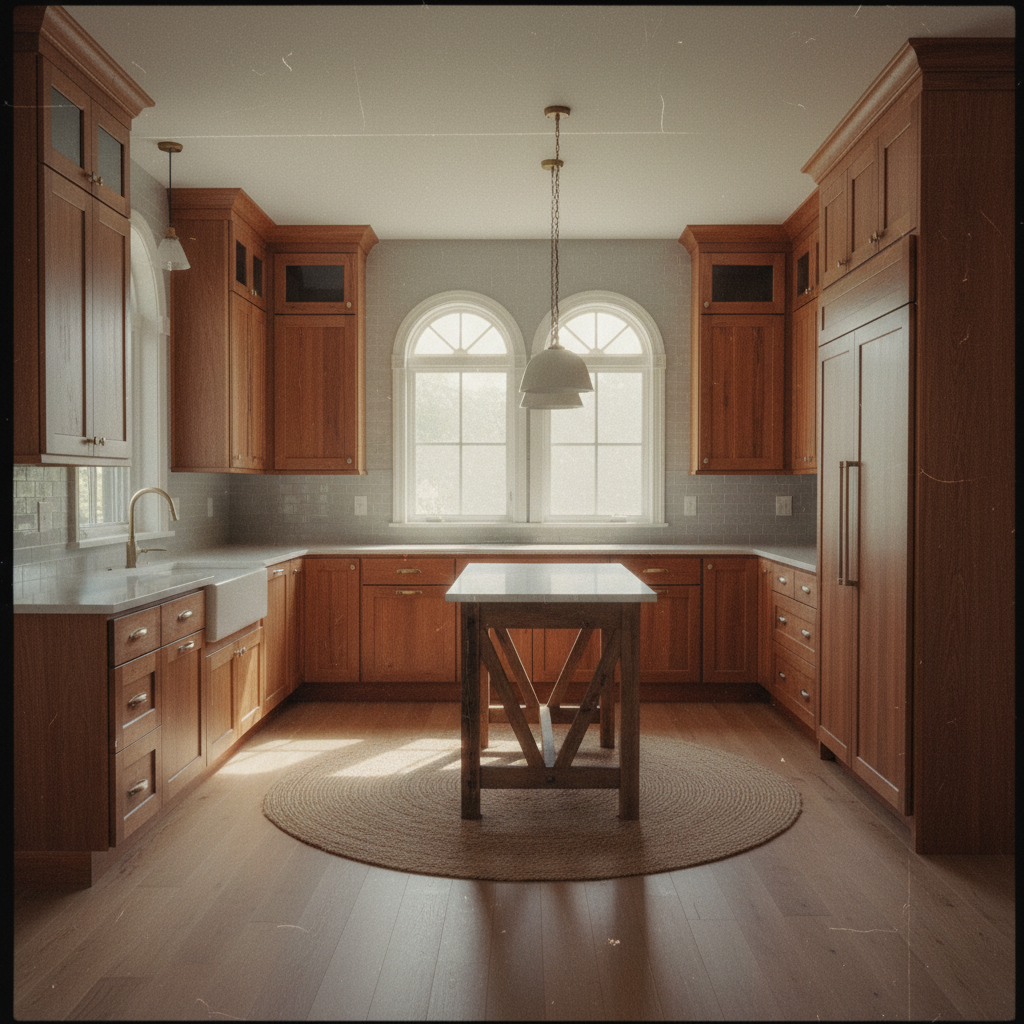
To understand how to choose quality kitchen cabinets that last, prioritize durable features like all plywood construction, dovetail drawer joints, and soft-close hardware. Investing in timeless materials such as natural wood while ensuring cabinets have full height back panels will guarantee long term structural integrity. These premium characteristics distinguish high quality cabinetry from standard stock options, offering both lasting performance and refined style.
Investing in a kitchen remodel only to watch your cabinet doors sag or your drawer glides fail within five years is a homeowner’s worst nightmare. While most cabinetry looks impressive under showroom lights, the difference between a temporary facade and a thirty-year investment lies in the structural details hidden beneath the surface. In the high-desert climate of Utah, where humidity fluctuations challenge even the best wood, selecting inferior materials often leads to costly repairs or premature replacements. This guide examines the essential hallmarks of professional-grade cabinetry. You will learn how to distinguish between plywood and particle board, why dovetail joinery remains the gold standard for drawers, and how to select hardware that withstands decades of daily use. We will also provide a strategic framework for budgeting and future-proofing your design to ensure your kitchen remains both functional and timeless for years to come.
Understanding the 30 Year Kitchen: Why Quality Cabinetry Is a Strategic Investment
When planning a renovation, homeowners must evaluate whether they are seeking a temporary update or a permanent foundation for their home. Understanding how to choose quality kitchen cabinets that last involves looking beyond the surface finish to the long-term cost of ownership. Research indicates that stock cabinets typically reach the end of their functional life after approximately 12 years. In contrast, high-quality custom cabinetry is engineered to serve a household for 30 years or more.
At Keith Cabinet, we consider cabinetry the bones of the kitchen. While you may eventually update paint colors or swap out countertops to refresh the aesthetic, the cabinet boxes themselves should remain structurally steadfast. Replacing failing boxes is a major undertaking that often requires a complete demolition; therefore, the quality of the box determines the longevity of the entire room. Investing in custom cabinet design and fabrication prevents this premature cycle of replacement.
Our philosophy focuses on balancing superior durability with everyday usability. In Carbon County homes, where kitchens are the center of daily activity, the cabinetry must withstand heavy use without sagging or losing its alignment. By prioritizing structural integrity now, you secure an asset that preserves the value of your property for decades to come.
The Foundation of Durability: Plywood vs Particle Board Cabinet Boxes
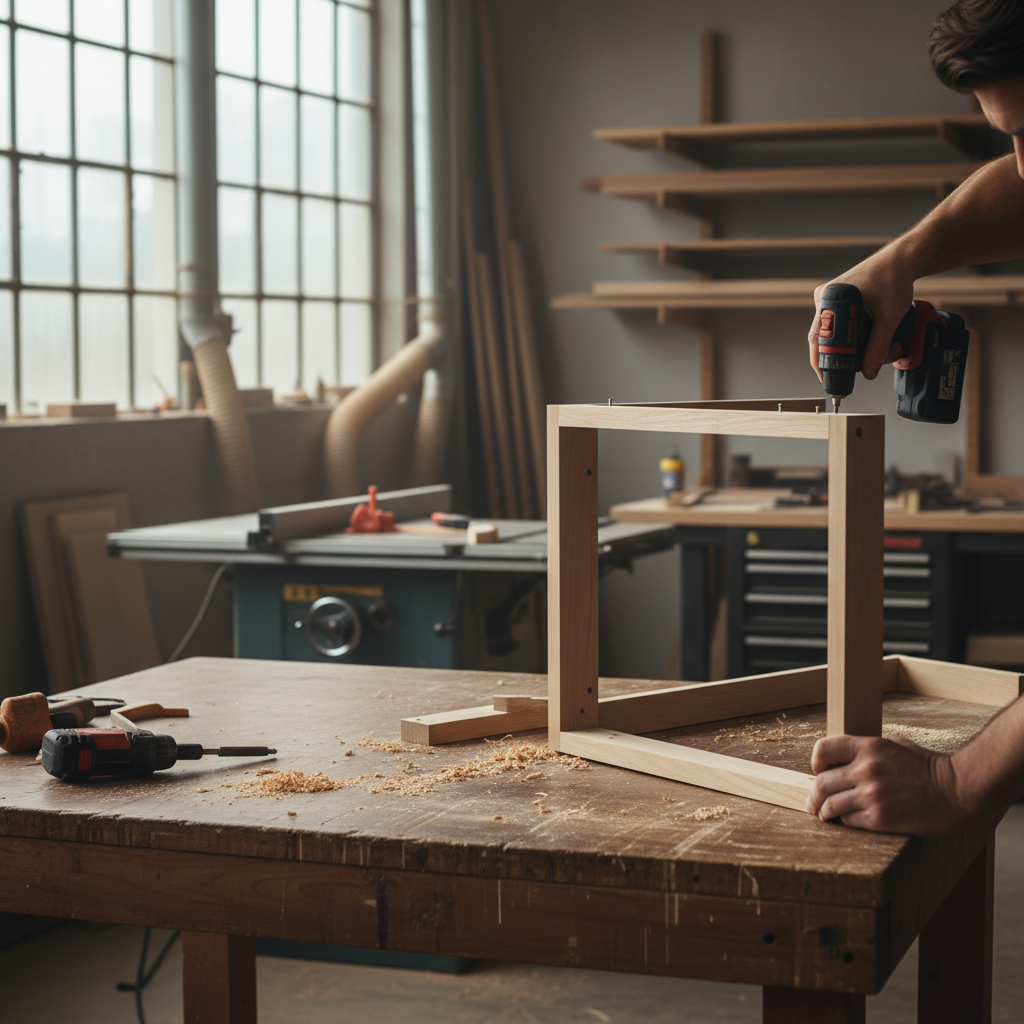
This integrity begins with the core materials used to construct the cabinet box. The debate between plywood and particle board is central to understanding how to choose quality kitchen cabinets that last. While particle board, often labeled as furniture board or MDF, is common in budget friendly stock lines, it lacks the structural resilience required for long term use. Particle board is composed of wood particles bonded with resin; when exposed to a minor sink leak or even high indoor humidity, these fibers absorb moisture and swell, leading to permanent deformation and crumbling.
In contrast, high end cabinetry utilizes furniture grade plywood. Constructed from thin layers of wood veneer glued in alternating grain directions, plywood offers superior dimensional stability and moisture resistance. This structural integrity is critical when installing heavy stone countertops like granite or quartz, which can weigh over 20 pounds per square foot. Over time, particle board boxes often sag under this weight, whereas plywood maintains its squareness and support.
Feature | Furniture-Grade Plywood | Particle Board / MDF |
|---|---|---|
Moisture Resistance | High; holds shape when damp | Low; swells and disintegrates |
Structural Strength | Excellent; supports heavy stone | Moderate; prone to sagging |
Fastener Retention | Superior; screws bite into wood | Poor; joints can pull apart |
Typical Lifespan | 30+ Years | 3 to 15 Years |
Another hallmark of quality is the use of full height back panels. Cheap cabinets often use a thin 1/8 inch hardboard back with a small nailing rail at the top. Professional grade boxes feature a solid plywood back panel, typically 1/2 inch thick, which ensures the cabinet remains perfectly plumb and level. This rigid foundation prevents the racking and shifting that causes doors to go out of alignment and drawers to bind as the house settles over time.
Joinery and Drawer Construction: Why Dovetails Rule the Kitchen
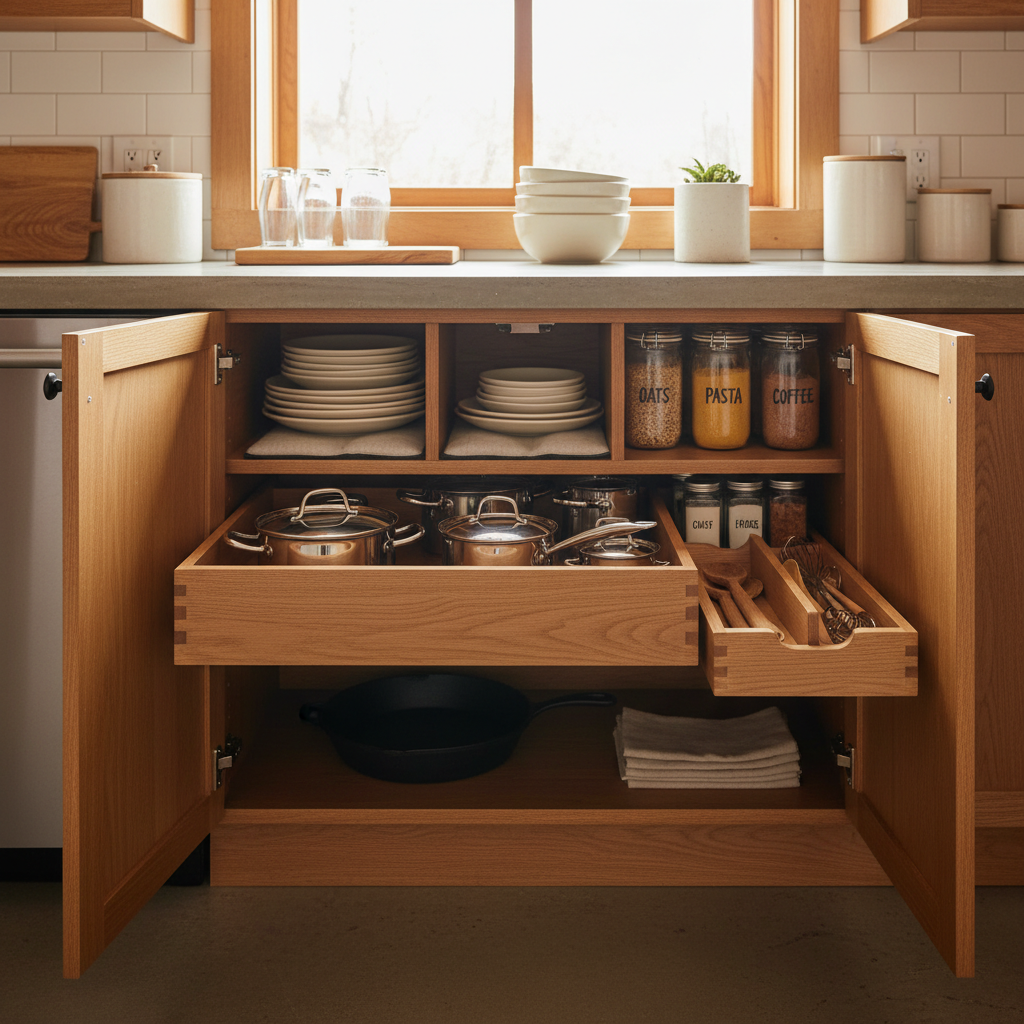
While the box provides the frame, the drawer is the most heavily used mechanical component of any kitchen. To understand how to choose quality kitchen cabinets that last, you must examine how these moving parts are assembled. Budget cabinets often rely on butt joints held together with glue and staples. Over time, the constant physical force of opening and closing a drawer causes these fasteners to pull loose, leading to wobbly boxes or total front-panel failure.
In contrast, professional-grade cabinetry utilizes dovetail joinery. This technique features interlocking wedge-shaped cutouts that mechanically lock the sides and front of the drawer box together. Even without glue, a dovetail joint is difficult to pull apart; with modern adhesives, it becomes nearly indestructible. High-quality cabinets feature solid wood drawer boxes, typically 5/8 inch thick, constructed independently from the decorative cabinet face. This separate-front design ensures that the aesthetic exterior is not responsible for the structural integrity of the drawer itself.
When reviewing our portfolio of residential projects, you will notice that the consistency of these small details defines the lifespan of the installation. A stapled drawer might survive five years of daily use before the bottom sags or the front pulls off, but a solid wood, dovetail-constructed drawer is designed to perform perfectly for fifty.
The Moving Parts: Selecting Hardware That Won't Fail
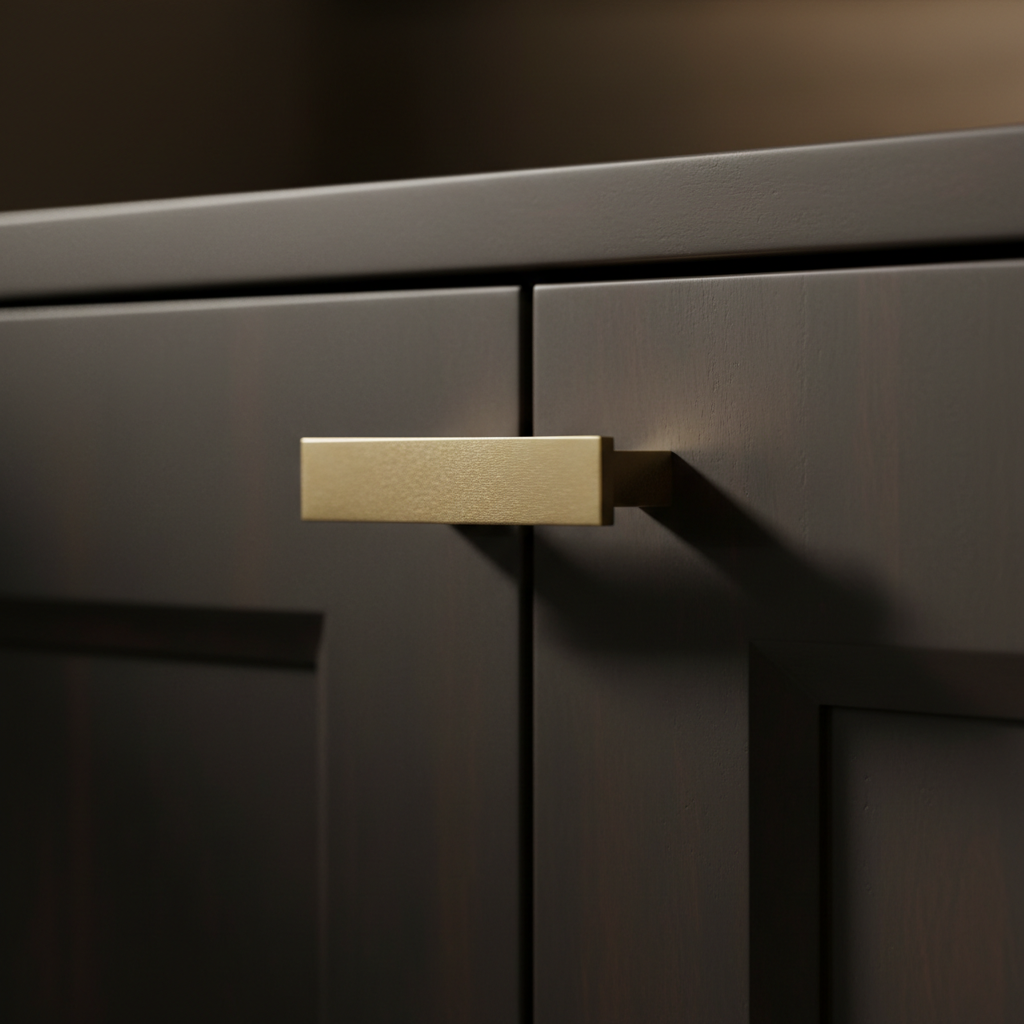
Even the sturdiest drawer box depends entirely on the metal hardware that facilitates its movement. Hardware failure is a primary reason homeowners replace cabinets prematurely; when a hinge loses tension or a glide sticks, the entire kitchen feels aged. To understand how to choose quality kitchen cabinets that last, prioritize six-way adjustable hinges. These allow for precise alignment and can be tweaked as a home settles, preventing the cabinet sag typical of builder grade alternatives.
Pair these hinges with undermount, full extension drawer glides. Unlike side mount tracks, undermount glides are concealed beneath the drawer, which protects the mechanism from dust and kitchen debris. Full extension capability allows you to reach the very back of the drawer without struggling. Professional grade hardware is rated for decades of daily use, often tested for 100,000 cycles or more. This level of engineering ensures that soft close features remain functional, protecting the wood joinery from the structural stress of slamming doors and maintaining the integrity of the installation.
Finish and Protection: Defending Against the Utah Climate
The exterior finish is the final, critical layer in determining how to choose quality kitchen cabinets that last. In the unique environment of Carbon County, the finish serves as a vital shield against our characteristic dry air and fluctuating indoor temperatures. Without a professional grade barrier, the wood beneath can lose moisture too rapidly, leading to warping or checking where the grain begins to split. This environmental stress is why a surface level paint job is insufficient for long term durability.
For maximum longevity, high quality cabinetry utilizes catalyzed conversion varnish rather than standard household paints or simple lacquers. This finish involves a chemical reaction that creates a cross linked molecular bond, resulting in a surface that is significantly harder and more elastic than air dried alternatives. While standard paint can chip or stain from common kitchen acids like lemon juice or vinegar, a conversion varnish is chemically resistant and exceptionally durable.
Finish Type | Durability Level | Moisture & Chemical Resistance | Maintenance |
|---|---|---|---|
Catalyzed Conversion Varnish | Industrial Grade | High resistance to stains and steam | Wipe clean; lasts decades |
Standard Paint or Lacquer | Consumer Grade | Prone to peeling and water rings | Requires frequent touch ups |
DIY or Field Applied Paint | Low Grade | Minimal; chips and stains easily | Often needs full repainting |
At Keith Cabinet, our custom cabinet design and fabrication process ensures that finishes are applied in a controlled environment. A factory grade finish is far superior to DIY options because it is cured to a hard, glass like consistency that resists the daily wear of a busy household. This professional application prevents the common yellowing and peeling seen in lower quality products, ensuring the cabinetry remains as beautiful as the day it was installed.
Budgeting with the 1 3 Rule for Cabinets
Selecting a professional grade finish is a significant step toward durability, but it must be supported by a sound financial strategy. To understand how to choose quality kitchen cabinets that last while maintaining a balanced renovation, homeowners should utilize the 1/3 rule. This industry standard suggests dividing your total investment into three equal segments to ensure no single component outclasses the others in terms of quality or lifespan.
Budget Category | Allocation | Included Items |
|---|---|---|
Cabinetry | 33% | Boxes, fronts, hardware, finishes |
Appliances | 33% | Fridge, range, dishwasher, sink |
Labor & Materials | 34% | Installation, countertops, flooring |
Allocating a full third of the budget to cabinetry ensures that the structural foundation matches the quality of high end appliances or stone countertops. Skimping on the boxes to afford a more expensive stove often leads to regret when the cabinets begin to sag under the weight of the stone. Through our custom cabinet design and fabrication services, we help Carbon County residents prioritize their spending on the components that offer the highest return on longevity. This strategic approach ensures your kitchen remains functional and beautiful for its full thirty year lifespan.
Future Proofing Your Style: 2026 Trends That Offer Longevity
Selecting the internal components ensures structural durability, but your choice of door style and color dictates whether the kitchen looks dated in five years or feels fresh for twenty. As we look toward 2026, the industry is shifting away from the stark, all-white aesthetic in favor of natural wood finishes. Species such as oak, maple, and cherry are regaining dominance because they highlight the organic texture of the material and hide daily wear better than painted surfaces.
When considering how to choose quality kitchen cabinets that last, homeowners should look toward "new classics" for their color palettes. Earthy, muted tones like olive green and terracotta are emerging as sophisticated alternatives to gray. These shades provide warmth and character without the risk of feeling like a passing fad, especially when paired with natural stone or wood accents.
Trend Element | Longevity Outlook | Style Best Practice |
|---|---|---|
Shaker Doors | High | Timeless; works in traditional and modern homes |
Natural Wood | High | Reveals grain; hides minor scratches and dust |
Olive & Terracotta | Moderate-High | Use as grounded neutrals for a custom look |
Flat-Panel Doors | High | Ideal for contemporary or minimalist builds |
Shaker designs remain the gold standard for longevity due to their clean lines and versatility. However, the most successful designs are those that feel authentic to the architecture of the Carbon County home. Through our custom cabinet design and fabrication process, we advise clients to prioritize architectural harmony over hyper-specific internet trends. Choosing a style that respects the home’s original character ensures that your investment retains its aesthetic value well into the 2030s.
The Final Quality Check: Professional Installation and Alignment
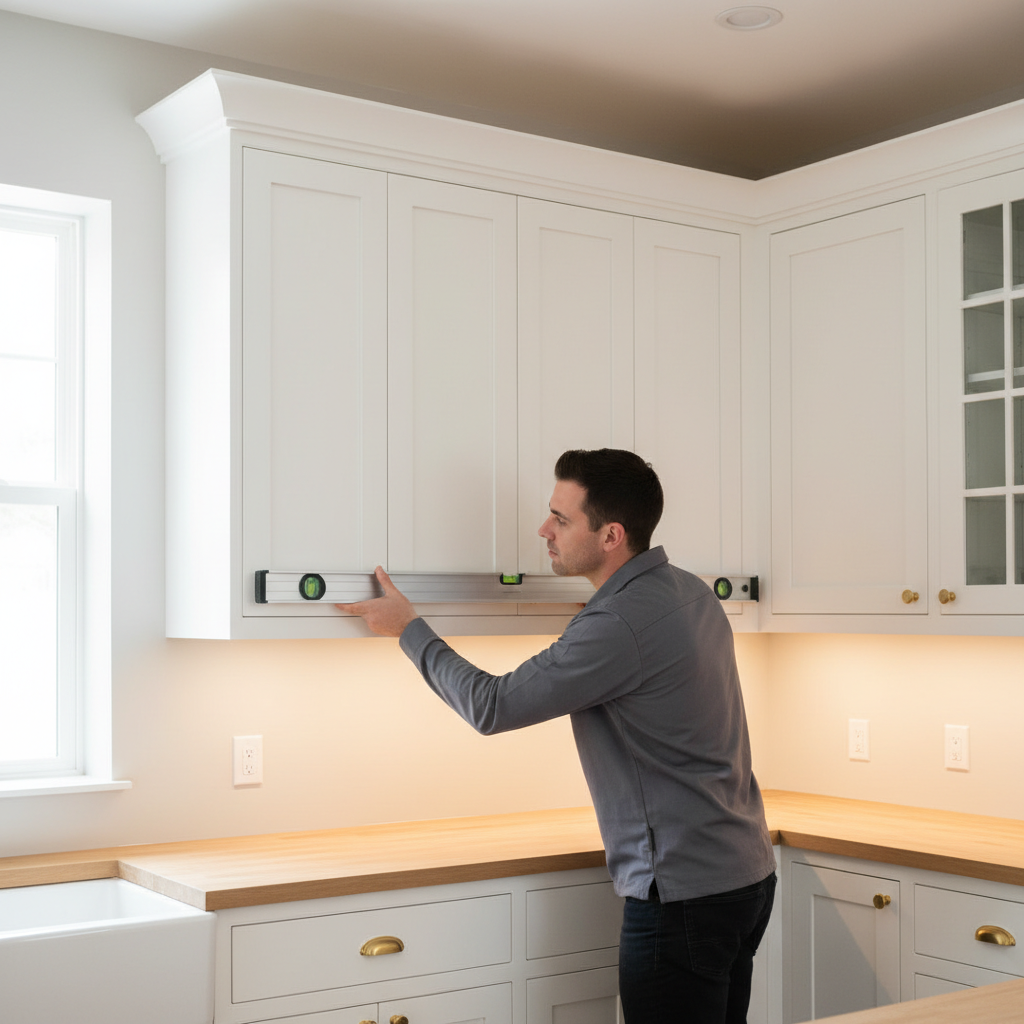
Even the most robustly built box will eventually fail if it is forced into an unlevel space. To truly understand how to choose quality kitchen cabinets that last, you must account for the final stage: the installation. A professional installer ensures every unit is level, plumb, and square. If a cabinet box is racked even a fraction of an inch during mounting, it puts constant tension on the joinery. Over time, this stress leads to warped boxes and doors that never stay aligned, regardless of how many times you adjust the hinges.
Working with a local specialist in Carbon County is particularly important because residential framing in our region can be unpredictable. An expert understands how to shim and scribe cabinets to account for the nuances of local construction and home settling. A poor installation often results in drawers that bind or hardware that wears out prematurely due to uneven weight distribution. You can view the precision required for these setups in our portfolio of residential projects. When you invest in custom cabinet design and fabrication, professional installation is the final safeguard for your investment. For personalized guidance on your next project, Contact Keith Cabinet to discuss how we ensure every unit is perfectly integrated into your home.
Selecting high quality cabinets is about more than just looks; it requires a careful eye for construction and material longevity. Once you understand these core elements, you can make a decision that adds lasting value to your home. If you want expert help refining your design or selecting the perfect materials, you can read more about my experience in the industry. Working with a specialist ensures that your kitchen is both beautiful and built to withstand the rigors of daily life.