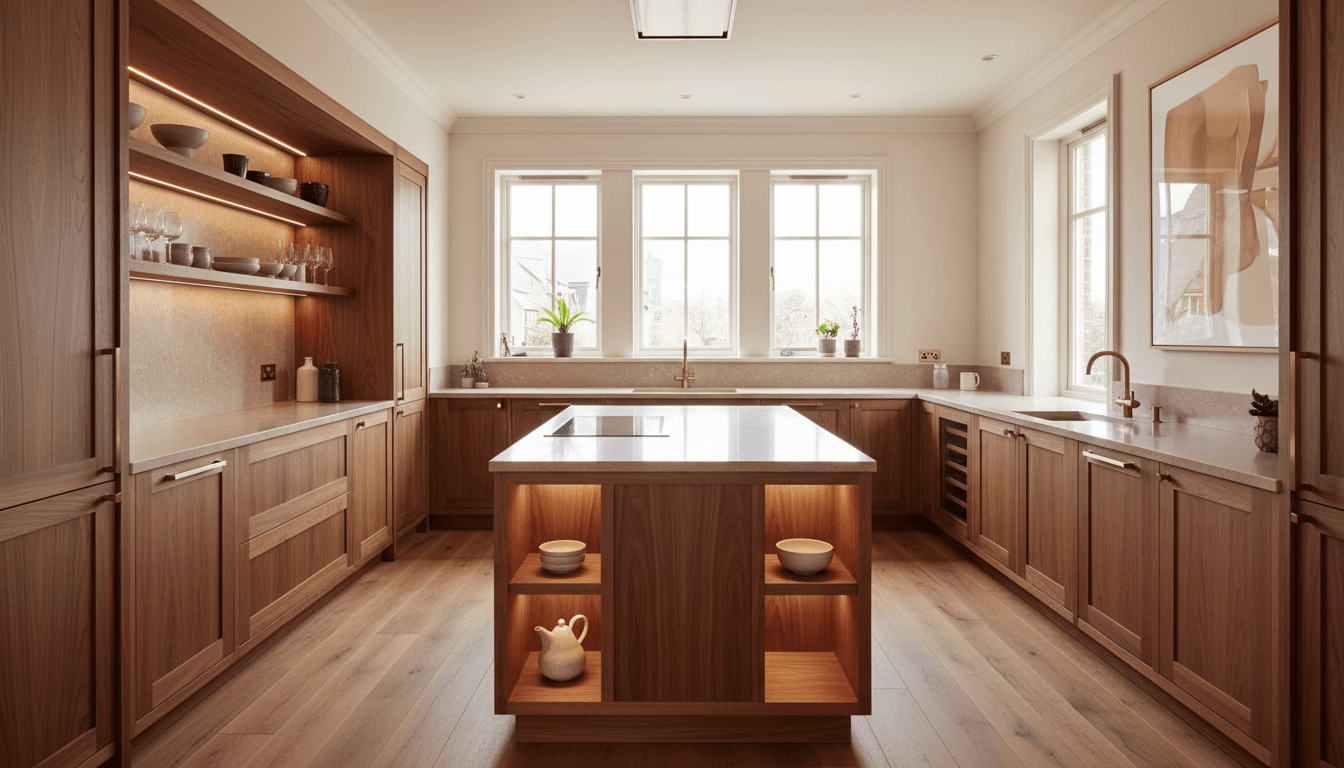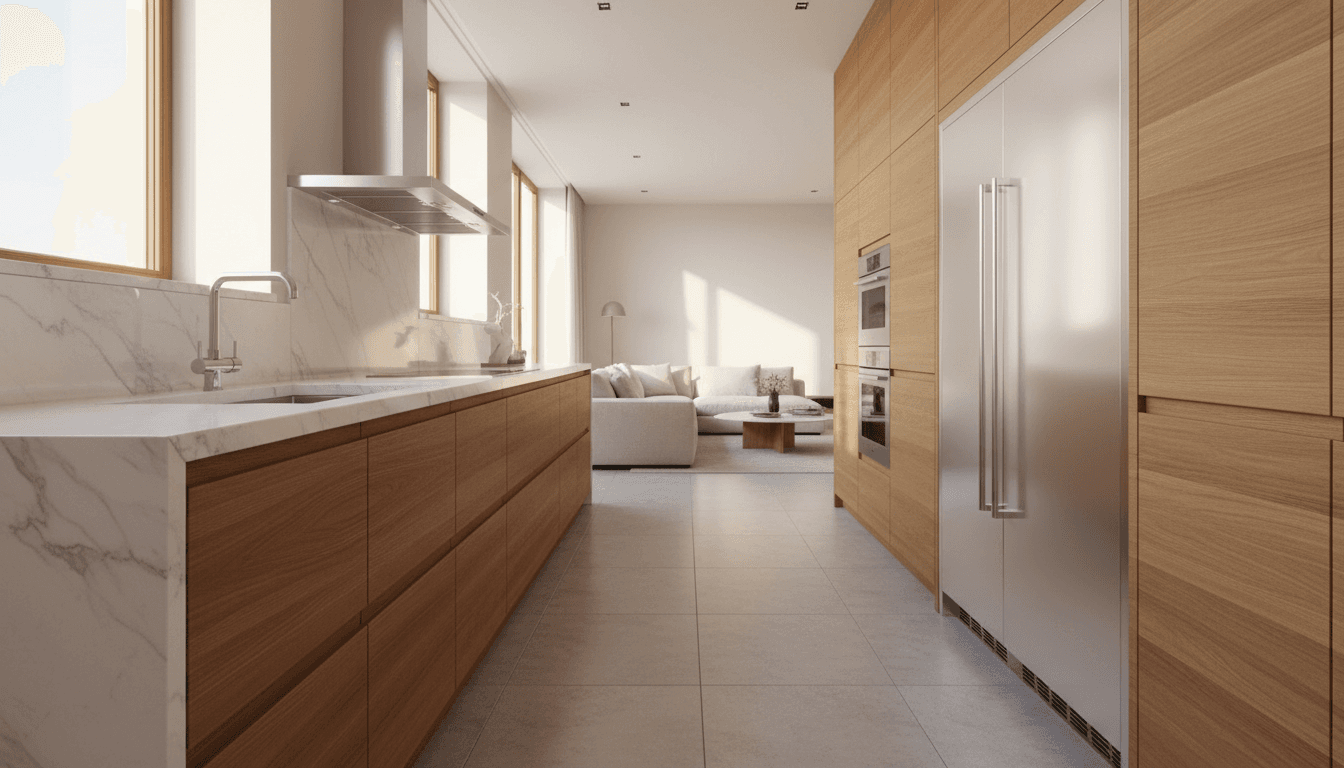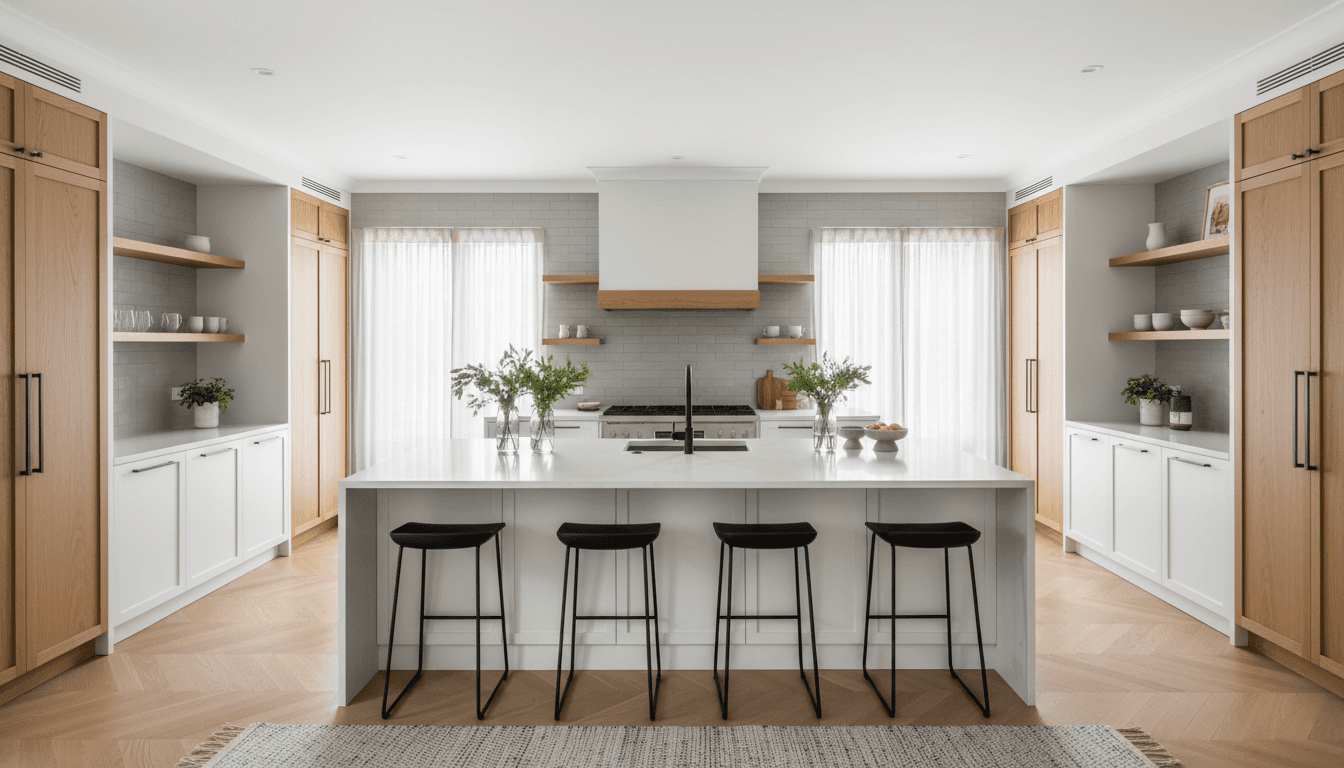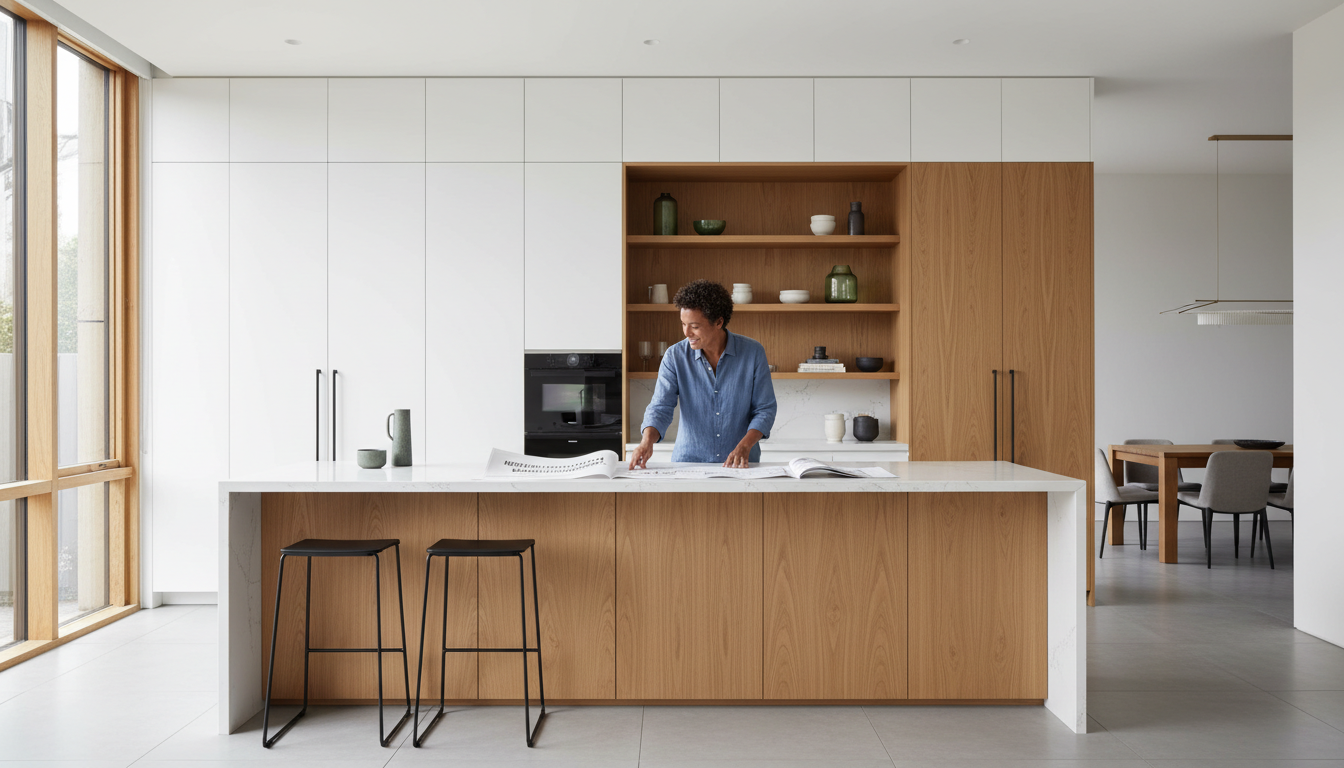
Custom cabinetry is worth it for homeowners seeking superior durability, high quality materials, and a precise fit that maximizes storage in unique kitchen layouts. Although the upfront cost is higher than stock options, the extended lifespan and increased home value provide a significant long term return on investment.
You have likely felt the frustration of a kitchen that nearly fits your needs but falls short in the details. In Carbon County, many homeowners struggle with stock cabinets that leave awkward gaps or fail under the weight of daily use. While the initial price of big box options is tempting, the long term cost of sagging shelves and peeling veneers is a heavy burden. At Keith Cabinet, we understand that your home deserves better than a one size fits all solution. This guide explores whether custom cabinetry is truly worth the investment for your Utah property. We will examine the material differences that ensure longevity, the precision required to maximize every square inch of your floor plan, and the actual impact these upgrades have on your home value. From budget realities to professional installation, here is what you need to know.
The Investment Question: Why Cabinets Matter in Carbon County Homes
Remodeling a kitchen or bathroom is often the single largest investment a Utah homeowner will make. Because these rooms serve as the functional heart of the home, the materials chosen today dictate the property’s livability for decades. When reviewing a quote, it is natural to ask: is custom cabinetry worth it? In markets like Price, Helper, and Wellington, the answer is tied directly to longevity and regional home values.
While stock cabinets are readily available at big-box retailers in larger cities, they are mass-produced for a generic environment. Local custom work addresses specific challenges unique to our area. Carbon County’s climate, characterized by significant seasonal shifts in humidity, causes wood to expand and contract. Custom builds utilize joinery and materials designed to handle these fluctuations without warping. Furthermore, many local residences feature unique rural layouts or have settled over time, resulting in walls that are rarely perfectly square. By opting for quality cabinetry services, you ensure that every inch of a non-standard space is utilized. Reviewing a portfolio of custom designs reveals how tailored solutions provide a level of structural integrity and aesthetic cohesion that stock options cannot match in the local market.
Durability and Materials: Why Custom Outlasts Stock Cabinets
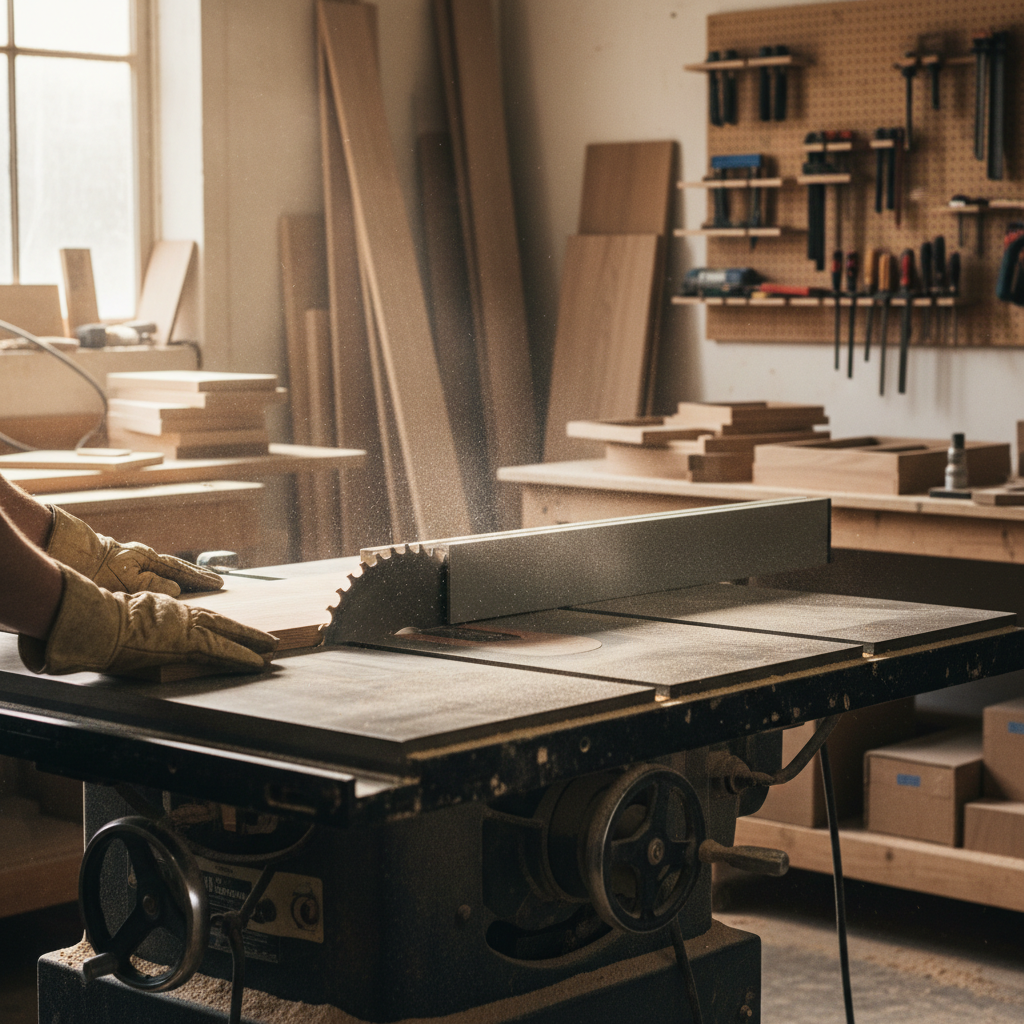
The structural integrity of a cabinet depends entirely on what is hidden beneath the finish. When evaluating if custom cabinetry is worth it, homeowners must look at the substrate materials and joinery methods. Stock cabinets are mass-produced using particleboard or medium-density fiberboard (MDF) cores wrapped in thin melamine or paper veneers. These materials are highly susceptible to moisture; a minor plumbing leak under a sink can cause particleboard to swell and disintegrate, often requiring a total replacement of the base cabinet.
At Keith Cabinet, construction focuses on furniture-grade plywood and solid hardwoods. Plywood is composed of multiple layers of wood grain oriented in alternating directions, which provides superior tensile strength and prevents the warping common in cheaper alternatives.
Feature | Stock Cabinets | Keith Cabinet Custom |
|
|---|---|---|---|
Core Material | Particleboard or MDF | Furniture-grade Plywood |
|
Face Frames | Wrapped MDF | Solid Hardwood |
|
Joinery | Staples and Glue | Dovetail and Pocket Screws |
|
Average Lifespan | 10 to 15 Years | 30+ Years |
Longevity translates directly into long-term savings. A standard $20,000 custom kitchen designed to last 30 years carries an effective cost of approximately $667 per year. Conversely, a $10,000 stock kitchen usually begins to show significant wear, such as sagging drawers or peeling veneers, within 10 to 15 years. Replacing a stock kitchen twice over a 30 year period costs more in materials and labor than investing in high-quality work once.
Choosing superior materials also means the cabinets can be refinished or repaired rather than discarded. Solid wood doors can be sanded and painted if your style preferences change, whereas damaged laminate or paper-faced stock cabinets generally cannot be restored. To discuss specific wood species and hardware options for your home, you can contact Keith Cabinet for a detailed material consultation.
The Precision Factor: Maximizing Every Square Inch
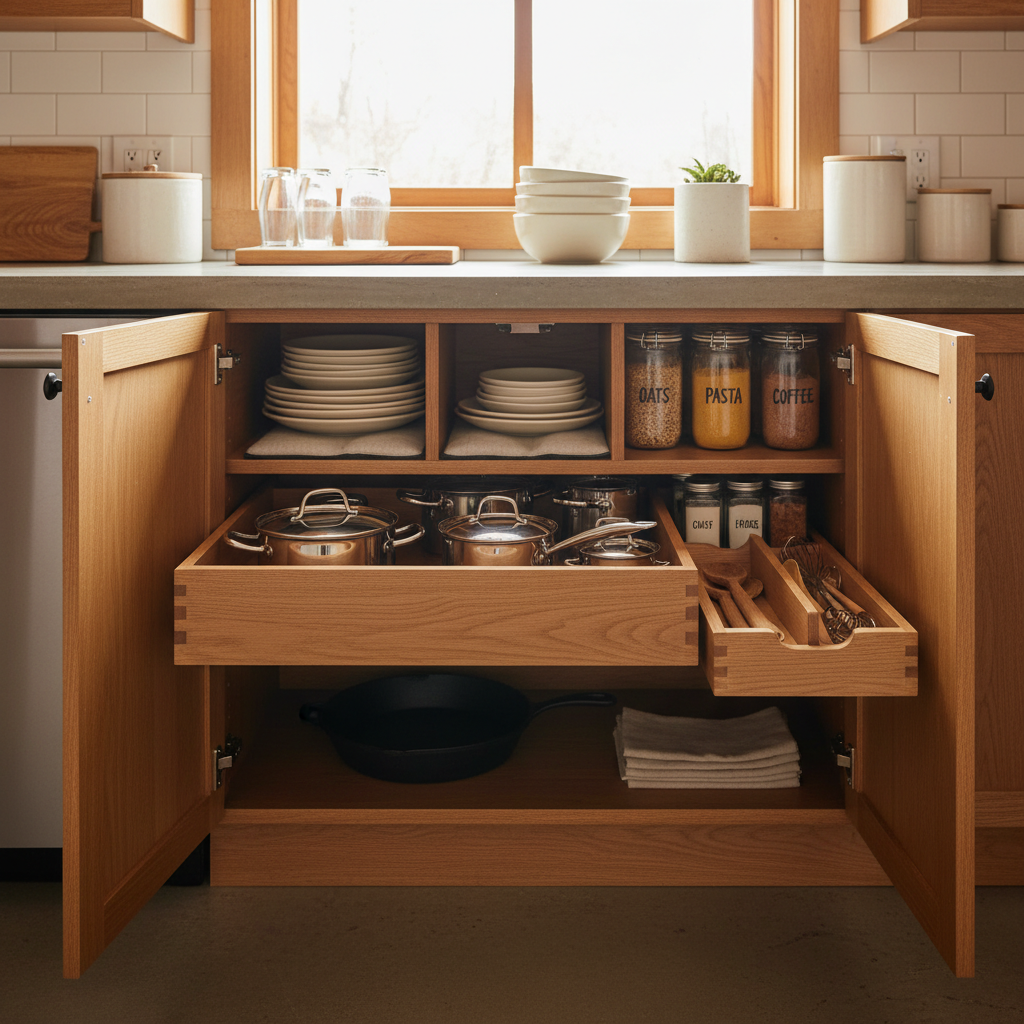
The physical footprint of a kitchen is frequently dictated by the limits of mass manufacturing rather than the needs of the homeowner. Stock cabinets are produced in rigid three-inch increments, typically 12, 15, or 18-inch widths. In a real-world floor plan, walls rarely align perfectly with these intervals. This discrepancy creates the need for filler strips, which are essentially decorative pieces of wood used to bridge gaps between the cabinet and the wall. In a compact kitchen or a workspace with limited square footage, these strips represent wasted space that could have been functional storage.
When evaluating if custom cabinetry is worth it, the answer often lies in the elimination of these dead zones. Keith Cabinet builds to the specific fraction of an inch required by your architecture. This level of precision is particularly vital for older homes in Price or Helper, where decades of settling have resulted in walls that are no longer plumb and corners that are rarely a perfect 90 degrees. Instead of forcing a standard box into an irregular space, custom fabrication allows for a seamless fit that follows the unique lines of your home.
Maximizing space also involves the internal configuration of the cabinetry. While stock options are generally empty shells, custom designs incorporate specialized storage solutions built into the initial plan. Our portfolio of custom designs illustrates how precision engineering translates to everyday usability through features like:
Vertical spice pull-outs that utilize narrow gaps.
Heavy-duty appliance lifts for stand mixers or food processors.
Deep drawer dividers tailored to a specific set of cookware.
Full-extension glides that provide access to the very back of a corner cabinet.
These elements ensure that every square inch of the room is intentional, providing a level of efficiency that mass-produced units simply cannot replicate.
Do Custom Cabinets Increase Home Value in Utah?
High-quality cabinetry significantly impacts property valuation in the Utah real estate market. In Carbon County, the kitchen remains the primary room where buyers decide if a home is worth the asking price. Because cabinets occupy the most visual real estate in this space, they serve as a benchmark for the home's overall condition. When a kitchen features professional, tailored millwork, it signals to a buyer that the property has been maintained with premium materials and long-term care.
When evaluating if is custom cabinetry worth it for resale, consider the psychological impact on a prospective buyer. A kitchen that requires no immediate upgrades reduces renovation fatigue, making the home more attractive than a competing property with aging, stock-grade units. This often results in a higher appraisal and a faster closing. In cities like Price and Helper, where homes often possess unique character, custom work proves that the layout has been optimized for modern living. Investing in quality cabinetry services ensures that the hardware, finishes, and construction meet the high standards appraisers look for when justifying a premium price point. A well-executed kitchen is not just a utility; it is a fixed asset that protects and grows home equity.
Budget Reality Check: Custom vs. Semi-Custom vs. Stock
Determining how much to allocate for a remodel requires understanding the three primary tiers of cabinetry available. While the initial price tag varies significantly between these options, the total project cost is driven by materials, size, and complexity. Knowing the differences helps clarify if custom cabinetry is worth it for your specific project goals.
Cabinet Category | Construction Method | Customization Level | Average Cost per Linear Foot |
|---|---|---|---|
Stock | Pre-made in standard sizes | Low (limited finishes) | $100 – $300 |
Semi-Custom | Pre-made boxes, custom doors | Medium (standard sizes) | $300 – $600 |
Full Custom | Built from scratch | Unlimited (bespoke sizes) | $500 – $1,200 |
Stock cabinets are mass-produced in fixed dimensions, typically requiring the filler strips mentioned previously. They are the most affordable entry point but offer the least flexibility in layout and wood quality. Semi-custom cabinets utilize pre-made carcasses or boxes, but allow you to select from a wider variety of door styles and finishes. However, they still generally adhere to standard size increments, which may not address the structural irregularities of older Carbon County homes.
Full custom work, which defines our quality cabinetry services, involves building every component from scratch based on a site-specific design. This approach eliminates standard size constraints entirely. For a standard kitchen remodel, a homeowner might see quotes ranging from $10,000 for high-end stock options to $30,000 or more for full custom fabrication. A $10,000 budget is often realistic for small, standard layouts or rental properties where basic functionality is the priority. Conversely, a $30,000 investment is appropriate for homeowners seeking furniture-grade materials, specialized storage inserts, and a layout that maximizes every inch of the floor plan. Before finalizing a budget, reviewing a portfolio of custom designs can help you identify which features are essential for your home. To receive a precise estimate tailored to your square footage, you can contact Keith Cabinet for a professional assessment.
The Installation Process: What to Expect from a Professional Team
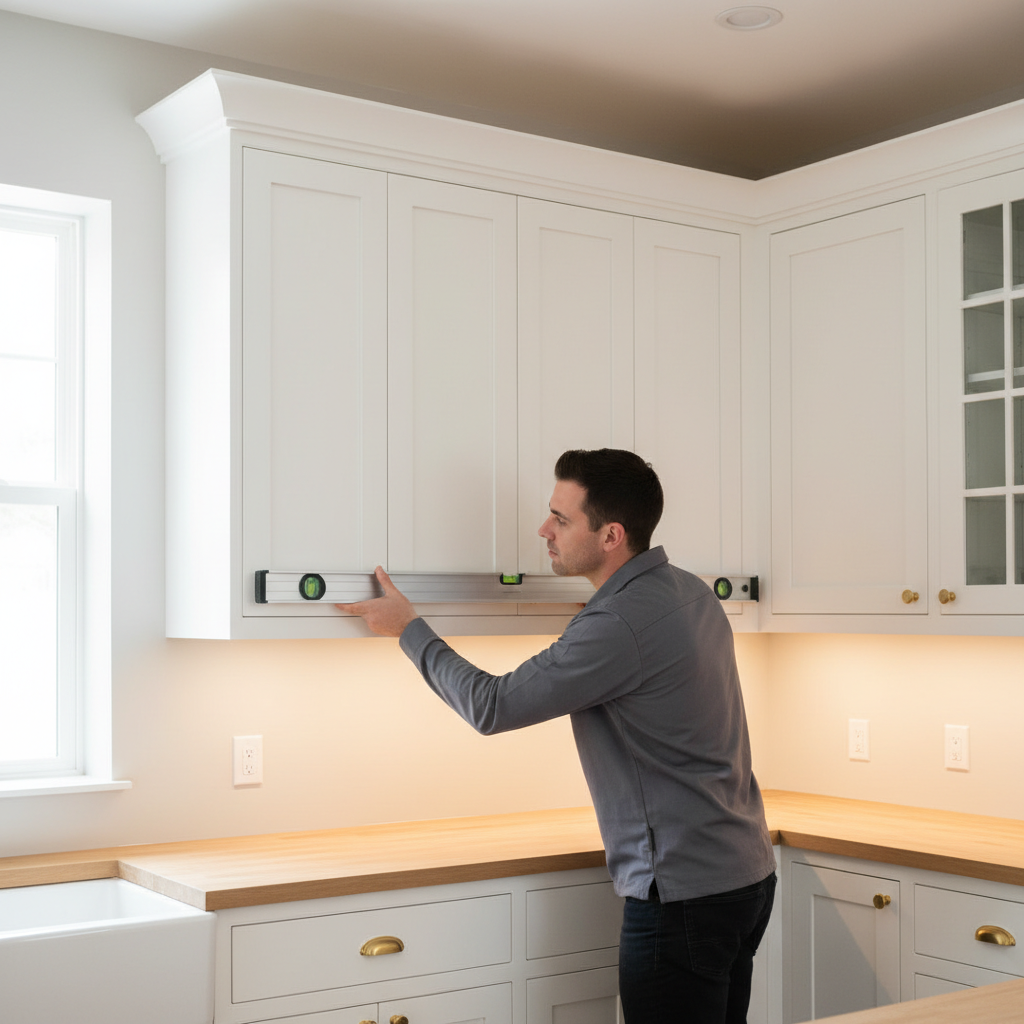
The physical realization of a kitchen design involves a structured timeline that protects your home environment while ensuring a precise fit. The process begins with meticulous site measurements. Unlike stock installations that rely on guesswork, quality cabinetry services involve mapping out every wall undulation and floor variance. This initial data informs the entire project, ensuring that the final product accounts for the specific architectural quirks found in Carbon County properties.
Following the measurement phase, fabrication moves to the Keith Cabinet shop. This off-site work is a significant advantage; it minimizes the dust, noise, and disruption within your living space. During this time, the raw materials are transformed into finished units based on the specifications found in our portfolio of custom designs.
The final on-site installation is the most critical stage for structural integrity. Professional installers do more than just screw boxes to a wall. They level the units with precision, scribe the edges to match irregular wall surfaces, and secure the frames to structural studs using appropriate fasteners. When homeowners ask if is custom cabinetry worth it, the answer often lies in this final assembly. A DIY installation frequently lacks the specialized tools or experience needed to ensure the cabinets are perfectly plumb. If a cabinet is even slightly out of level, the heavy weight of granite or quartz countertops can cause the wood to stress or drawers to bind over time. Contact Keith Cabinet to learn more about how our professional installation team ensures your investment remains stable and functional for decades.
Ultimately, choosing custom cabinetry is about balancing your long-term goals with your current budget. For many homeowners here in Carbon County, the blend of durability and tailored design provides a value that stock options simply cannot match. If you find yourself needing expert help to navigate these choices, I am here to assist. You can learn more on my About page to see how we can transform your kitchen together. Taking this step ensures your home reflects your unique style and needs.